Subjective post-operative nerve assessments create diagnostic blind spots and medico-legal vulnerabilities. Standardizing evaluations with three-tiered testing (Levels A–C) and the Medical Research Council Scale (grades S0–S4) enables clear, objective triage: patients with persistent S0–S2 scores at 8 to 12 weeks warrant immediate microsurgical referral, an intervention pathway proven to achieve an 81.7% functional sensory recovery rate across 186 repairs.

2026-11-03 22:11:06
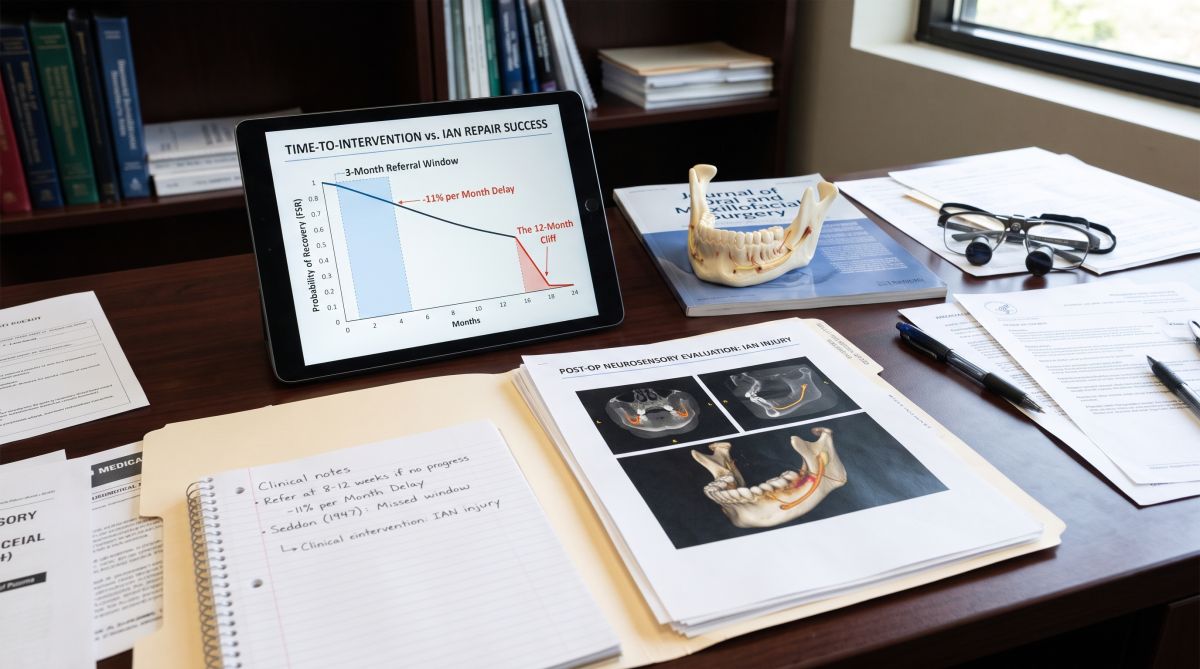
Passive expectant management ("wait and see") of inferior alveolar nerve (IAN) injuries frequently compromises patient outcomes by missing the optimal biological window for microsurgical repair. Based on a landmark cohort study of 186 IAN microsurgical repairs published in the Journal of Oral and Maxillofacial Surgery, this clinician-focused article outlines why timely, objective triage and early referral are critical to restoring functional sensory recovery (FSR). Key clinical takeaways: - The Mathematical Cost of Delay - Independent Prognostic Factors - Objective Triage Over Subjective Reports - The Three-Month Referral Protocol
2026-10-24 19:14:40
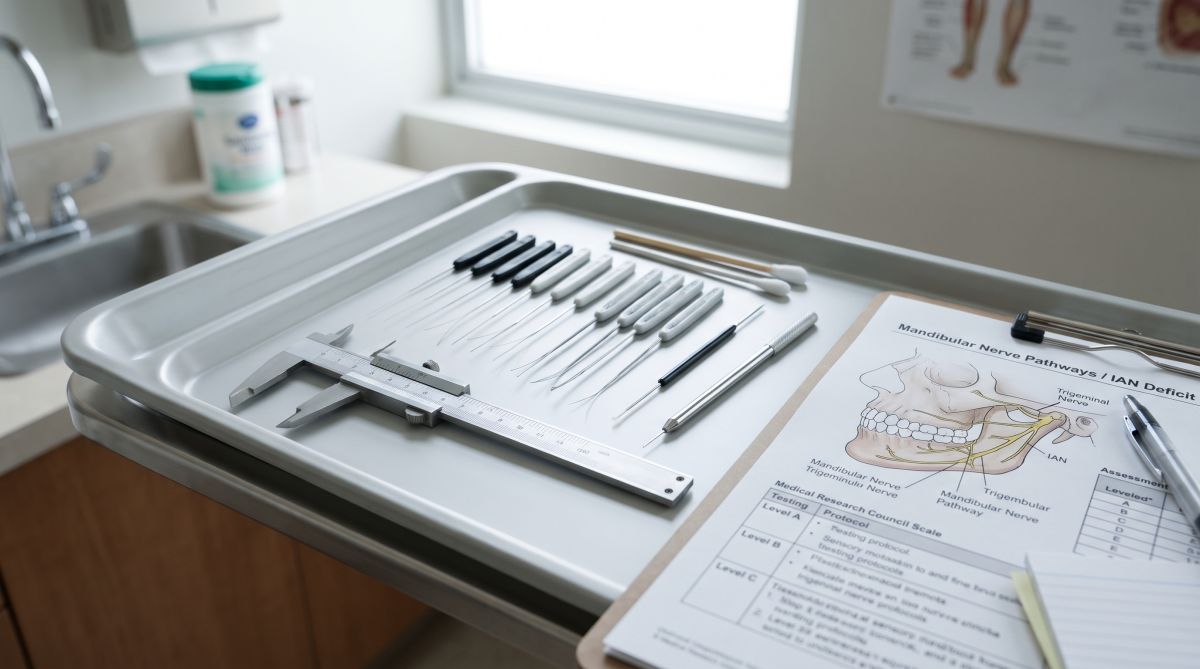
Subjective post-operative nerve assessments create diagnostic blind spots and medico-legal vulnerabilities. Standardizing evaluations with three-tiered testing (Levels A–C) and the Medical Research Council Scale (grades S0–S4) enables clear, objective triage: patients with persistent S0–S2 scores at 8 to 12 weeks warrant immediate microsurgical referral, an intervention pathway proven to achieve an 81.7% functional sensory recovery rate across 186 repairs.
2026-11-03 22:11:06
Passive expectant management ("wait and see") of inferior alveolar nerve (IAN) injuries frequently compromises patient outcomes by missing the optimal biological window for microsurgical repair. Based on a landmark cohort study of 186 IAN microsurgical repairs published in the Journal of Oral and Maxillofacial Surgery, this clinician-focused article outlines why timely, objective triage and early referral are critical to restoring functional sensory recovery (FSR). Key clinical takeaways: - The Mathematical Cost of Delay - Independent Prognostic Factors - Objective Triage Over Subjective Reports - The Three-Month Referral Protocol
2026-10-24 19:14:40
Fearing permanent pain often prevents patients from treating lower lip and chin numbness after dental procedures. Dr. Shahrokh Bagheri’s 20-year study of 186 inferior alveolar nerve repairs proves that reconstructive microsurgery carries a 0% risk of causing chronic neuropathic pain in patients presenting with numbness, while restoring functional sensation in over 80% of cases. Serving patients across Atlanta, Marietta, Alpharetta, Sandy Springs, Hiram, Stockbridge, and Suwanee, Georgia Oral & Facial Reconstructive Surgery provides safe, evidence-based care to restore feeling and quality of life.
2026-10-09 18:15:11

Persistent numbness in the lower lip, chin, or gums following dental surgery is a nerve injury that can often be reversed, provided action is taken quickly. A landmark clinical study of 186 inferior alveolar nerve (IAN) microsurgical repairs demonstrates that permanent sensation loss is rarely inevitable for patients who seek timely treatment.
2026-09-25 20:50:56