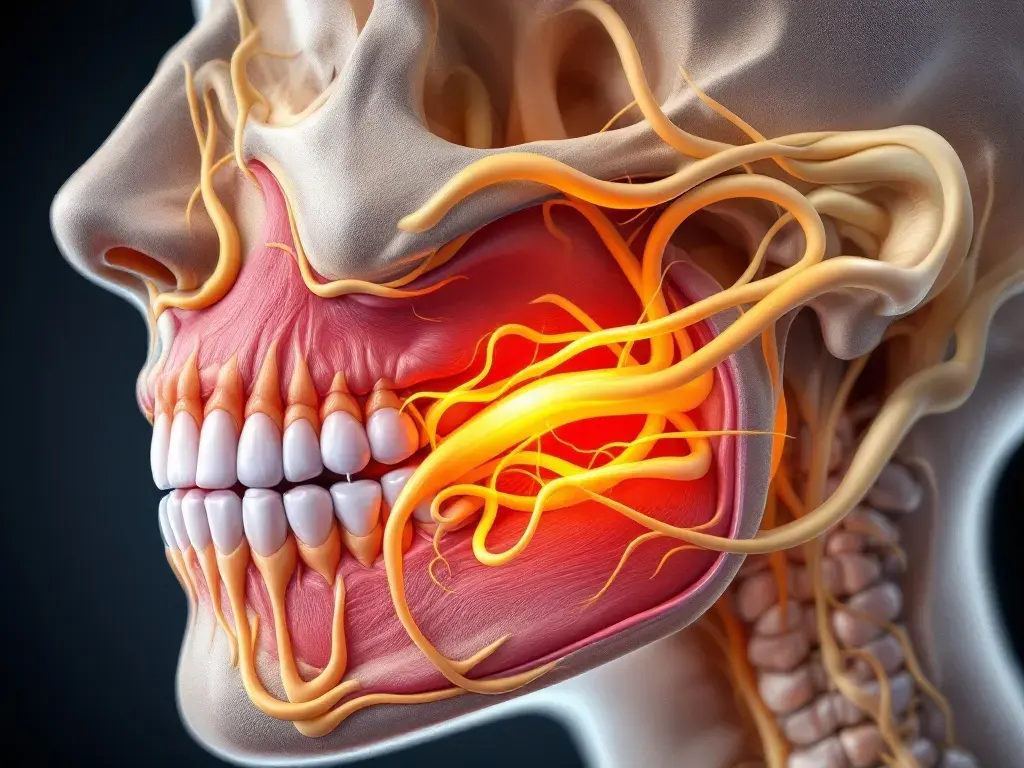
Injuries to peripheral branches (IAN, LN, LBN) of the
trigeminal nerve during the removal of M3s are known and
accepted risks in oral and maxillofacial surgery practice. These
risks might be reduced by modifications of evaluation or
surgical techniques, depending on the surgeon's judgment in
individual patients. If a nerve injury does occur, prompt
recognition, subjective and objective evaluation, and
development of a treatment plan, if the sensory deficit fails to
resolve in a reasonable period and is unacceptable to the
patient, give the patient the best chance of achieving
improvement or recovery of sensory function in the distribution
of the injured nerve. Microneurosurgery may produce return of
useful sensory function or complete sensory recovery, if done in
a timely fashion by an experienced microsurgeon, in greater than
80% of patients who sustain nerve injuries during the removal of
M3s.
PMID: 21277501
DOI: 10.1016/j.cxom.2010.11.009[Indexed for MEDLINE]