BACKGROUND:
Nerve injury is a known and accepted risk of many oral surgical
and dental procedures. Such injuries may occur despite the
practitioner's providing the best of care. Taking proactive
measures during evaluation and surgery may reduce the incidence
of nerve injury.
RESULTS:
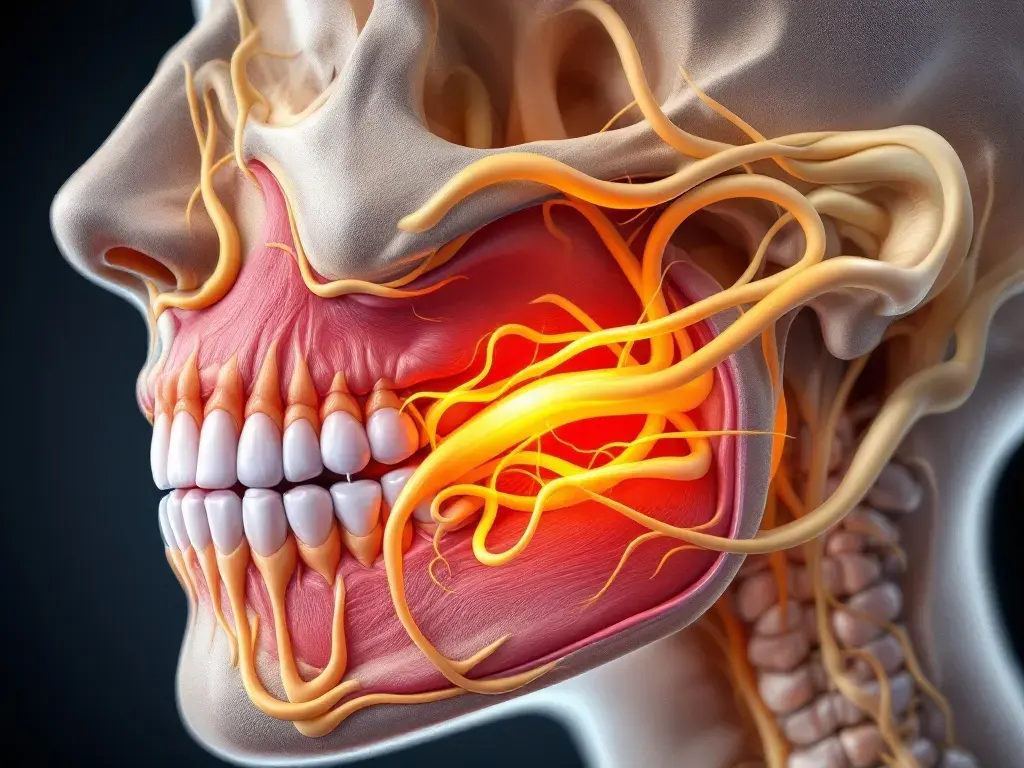
Injuries to the peripheral branches of the trigeminal nerve can
cause unfavorable effects on orofacial sensation and related
functions such as eating, drinking, washing, speaking, shaving
and kissing.
CONCLUSIONS:
When nerve injuries secondary to dental or oral surgery
procedures fail to resolve promptly and the resulting
dysesthesia is unacceptable to the patient, timely treatment
gives the patient the best chance of a favorable outcome.
Treatment may involve surgical exploration and repair of the
injured nerve.
PRACTICAL IMPLICATIONS:
Recognition of and prompt referral for nerve injuries give the
patient the best chance of achieving improvement or recovery of
sensory function in the distribution of the injured nerve.